
The Digital Theater: Why Your LinkedIn Profile Is a Performance

“`html
The Digital Theater: Why Your LinkedIn Profile Is a Performance
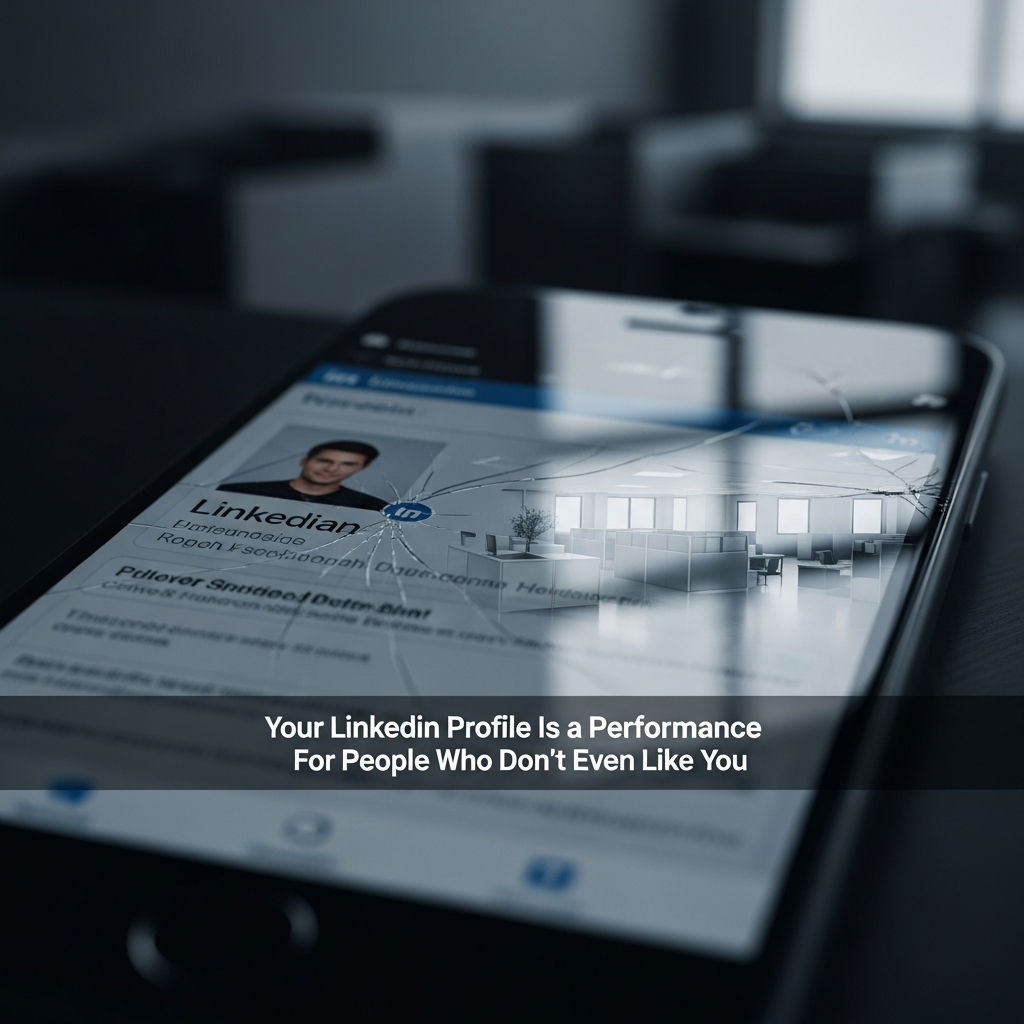
In the modern professional world, your LinkedIn profile is no longer just a digital resume; it has transformed into a high-stakes theatrical stage. We spend hours curating the perfect headshot, agonizing over the “About” section, and framing every minor career milestone as a “humbled and honored” breakthrough. But here is the uncomfortable truth: you aren’t performing for your friends or your mentors. You are performing for a faceless audience of recruiters, ex-colleagues, and industry rivals—most of whom are too busy performing themselves to actually like or care about you.
The rise of personal branding on LinkedIn has created a culture of performative professionalism. We have entered an era where “showing the work” is often more important than the work itself. This article explores the psychological cost of this performance, why the algorithm rewards inauthenticity, and how you can reclaim your professional identity from the clutches of social media posturing.
The “Humblebrag” and the Architecture of the Professional Mask
If you have spent more than five minutes scrolling through your feed, you’ve seen it: the “broetry.” Short, punchy sentences. A story about a failure that—surprise!—resulted in a massive success. A photo of a laptop at the beach with a caption about “the hustle.” This is the architecture of the LinkedIn performance.
The Anatomy of a Viral Professional Post
- The Hook: A dramatic statement about quitting a job or a “life-changing” coffee meeting.
- The Vulnerability: Admitting to a minor flaw that is actually a hidden strength (e.g., “I work too hard”).
- The Lesson: A platitude about leadership, resilience, or “synergy.”
- The Engagement Bait: Asking “Agree?” at the end to satisfy the LinkedIn algorithm.
We craft these narratives not because they represent our daily reality, but because we are terrified of being perceived as stagnant. In a volatile job market, your LinkedIn profile acts as a protective layer of “employability” armor. You aren’t posting for your health; you’re posting to prove you’re still relevant to people who would replace you in a heartbeat if the budget required it.
Performing for the Ghost Audience: Who Are You Really Talking To?
When you update your status or share an article, who do you imagine reading it? For most, the audience is a strange mix of ghosts from the past and gatekeepers of the future. You are performing for:
- The Recruiter: Who spends an average of six seconds looking at your profile and values “keywords” over character.
- The Ex-Colleague: Who you haven’t spoken to in five years but want to impress with your new fancy job title.
- The Industry Peer: Who is effectively your competitor in a saturated market.
- The Algorithm: A mathematical ghost that demands consistency over quality.
The irony of LinkedIn networking is that the more “successful” you appear, the less authentic you become. We are all participating in a collective delusion where we pretend to be fascinated by “B2B SaaS growth strategies” because we think that’s what the “important people” want to see. In reality, those people are likely doing the exact same thing, hoping you’ll give them the “Like” that validates their own performance.
The Algorithm vs. Authenticity: Why Boring Wins
The LinkedIn algorithm is designed to keep users on the platform. It prioritizes engagement, which unfortunately often leads to the lowest common denominator of content. High-level technical insights rarely go viral; “inspirational” stories about overcoming adversity (no matter how fabricated) do. This creates a feedback loop where users are incentivized to be “performatively authentic.”
Performative authenticity is the act of sharing just enough personal information to seem human, while carefully ensuring it aligns with a corporate-friendly brand. It is the “I cried in my car today” post that ends with a link to a productivity masterclass. When the algorithm rewards this behavior, it pushes real human connection to the margins. We stop talking to each other and start broadcasting at each other.
The Psychological Toll of the “Always-On” Professional Identity
Living in a state of constant performance is exhausting. When your professional identity is tied to a public-facing digital profile, the line between “Who I Am” and “What I Do” becomes dangerously thin. This leads to several psychological phenomena:
1. Imposter Syndrome on Steroids
When you spend all day looking at the curated “Highlight Reels” of people you don’t even like, your own “Behind the Scenes” feels inadequate. You begin to feel like a fraud because you know your life isn’t a series of “pivotal growth moments.”
2. The Commodification of the Self
You start viewing your hobbies, your failures, and even your family time as potential “content.” If you go for a hike but don’t extract a lesson about “scaling a business,” did it even happen? This digital burnout is a direct result of turning your life into a brand.
3. Social Validation Dependency
Our brains are hardwired for social belonging. When a post about a new certification gets 100 likes, we get a dopamine hit. When a thoughtful post about a complex industry problem gets two likes, we feel professional rejection. We end up tailoring our career moves to satisfy the crowd rather than our own passions.
How to Exit the Performance (Without Deleting Your Account)
In a world where personal branding is necessary for career survival, you can’t always just “opt-out.” However, you can change the way you interact with the theater. You can move from being a performer to being a participant. Here is how to reclaim your soul on LinkedIn:
Stop Seeking Consensus
Stop asking “Agree?” at the end of your posts. Speak your truth, share your actual expertise, and don’t worry about the engagement metrics. If you have a niche skill, talk to the five people who actually understand it, rather than the 500 who will give it a “praise” emoji without reading it.
Curate Your Feed Mercilessly
If someone’s posts make you feel inadequate or annoyed, unfollow them. You can stay connected (so they don’t know you’ve muted them) while cleaning your mental space of “hustle porn.” Follow people who provide actual educational value or who challenge your thinking in a healthy way.
Practice “Dark Networking”
The most valuable career networking happens in the DMs, in emails, or over coffee—not in the public comments section. Use LinkedIn as a directory to find interesting people, then take the conversation off the stage. Real opportunities are built on private trust, not public performance.
Conclusion: Moving Beyond the Mask
Your LinkedIn profile is a tool, not a mirror. It is a digital billboard designed to help you navigate a capitalist landscape that demands a certain level of visibility. But you must remember that the performance is for a crowd that, by and large, isn’t rooting for your personal happiness—they are looking for a solution to their own problems.
By recognizing the performative nature of the platform, you can detach your self-worth from your “impressions” and “reach.” Be professional, be visible, but don’t mistake the theater for the reality. At the end of the day, the people who truly matter in your career are the ones who know what you’re like when the stage lights are off and the “Post” button hasn’t been clicked.
Quick Tips for an Authentic (Yet Effective) LinkedIn Presence:
- Focus on Utility: Share things that help others, not things that just make you look good.
- Be Brief: You don’t need a 500-word story for every minor update.
- Interact with Real Intent: Comment on others’ posts with genuine questions, not just “Great share!”
- Set Boundaries: Limit your LinkedIn usage to 15 minutes a day to avoid the comparison trap.
“`